Relay stability is a crucial concept in the analysis and design of control systems, particularly when using relays for switching and feedback functions. A relay, by its very nature, is a nonlinear device that can either be in an “on” or “off” state, making it ideal for applications where discrete control actions are required. However, this simplicity also introduces significant challenges when it comes to maintaining stability, especially in systems with feedback or oscillatory behavior. Understanding relay stability is therefore essential to ensure reliable system performance and to avoid potential malfunction or instability.
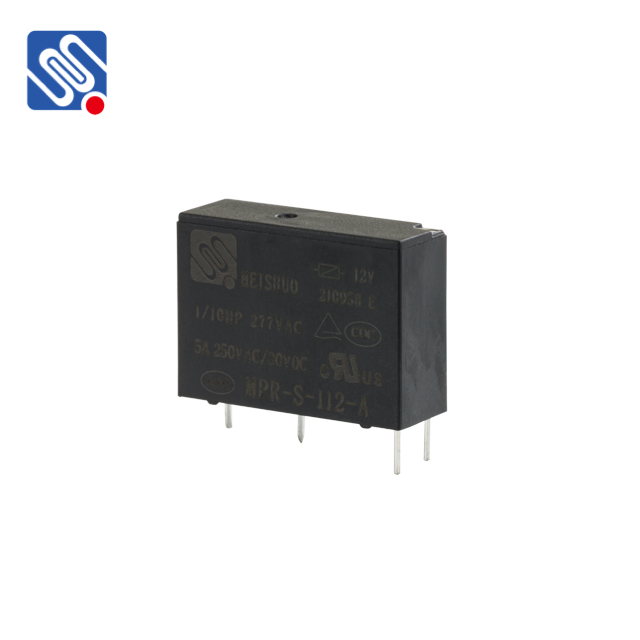
What is Relay Stability? Relay stability refers to the ability of a system, which includes a relay, to function without oscillating or diverging into instability. In many control systems, relays are used to switch between different states based on certain input conditions. For instance, in temperature control systems, a relay might switch a heating element on or off based on the temperature of the environment. While this is a straightforward function, problems arise when the relay repeatedly switches states, leading to oscillations or excessive switching. This phenomenon, often referred to as “chattering” or “hunting,” occurs when the relay’s switching threshold is not appropriately tuned to the system’s dynamics. A relay that responds too quickly to small changes in input or has too narrow a dead zone may cause the system to oscillate around a setpoint instead of stabilizing. Therefore, relay stability is a measure of how effectively the relay responds to inputs without causing undesirable fluctuations.
Leave a Reply