A General-purpose relay (GPR) is a versatile and widely used electrical component in various industries. It serves as an essential part of control circuits, enabling small electrical signals to control large power devices. Its significance stems from its ability to switch on and off high-current loads using low-voltage control signals, providing both safety and efficiency. This article will explore the structure, working principle, applications, and considerations of the General-purpose relay, demonstrating its importance in electrical and electronic systems.
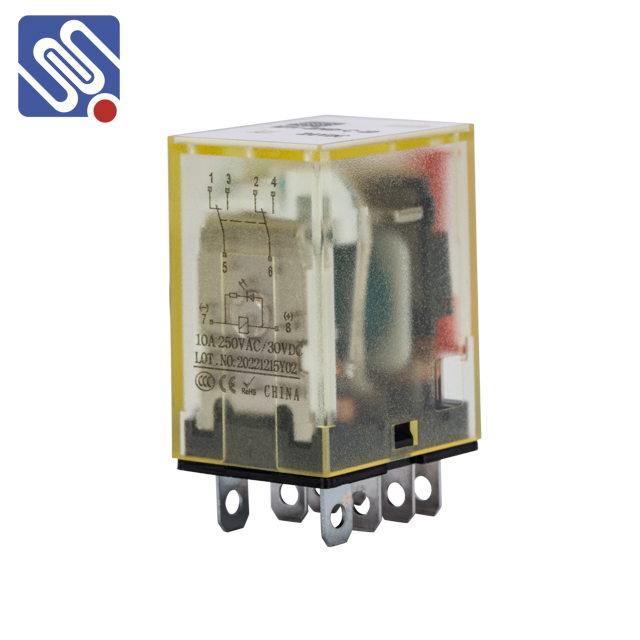
Structure and Working Principle of General-purpose Relay A General-purpose relay consists of several core components that work together to switch the electrical circuits. The main parts include: Coil (Electromagnetic Coil): The coil is the central part of a relay that creates an electromagnetic field when energized. This electromagnetic force activates the relay, causing its contacts to either open or close. The coil operates on a low voltage, typically in the range of 5V to 240V, depending on the relay model. Contacts: The relay has multiple contacts (normally open or normally closed) that are controlled by the movement of the armature when the coil is energized. These contacts form the primary connection between the load and the control circuit. The most common types of contacts are:
Leave a Reply