Electric vehicles (EVs) are rapidly transforming the automotive industry, driven by the need for sustainable transportation and reduced carbon emissions. One of the critical components in an EV’s electrical architecture is the high-voltage relay, responsible for safely controlling the connection between the battery pack and the powertrain. Among the standards governing these devices, the IEC 61811 EV Relay standard has become a benchmark for ensuring performance, reliability, and safety in high-voltage automotive applications.
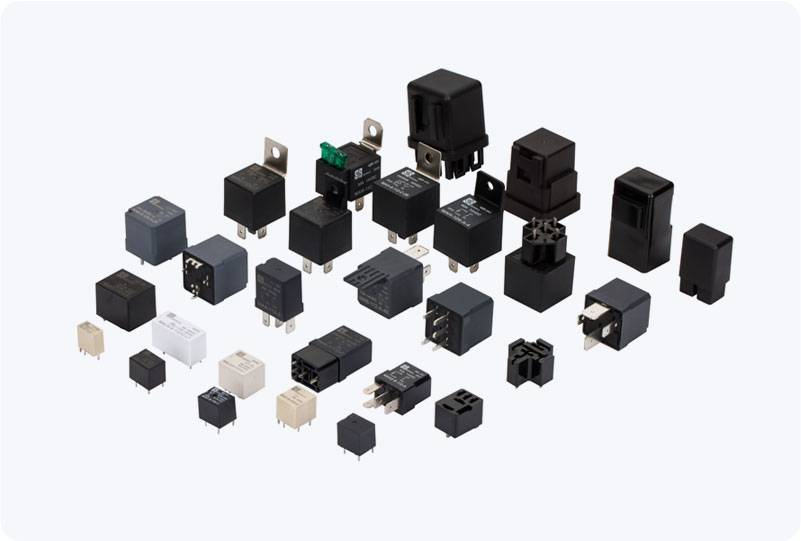
The IEC 61811 standard specifically addresses the requirements for direct current (DC) high-voltage relays used in electric vehicles. Unlike traditional alternating current (AC) relays, EV relays operate under high DC voltages, typically ranging from 400V to 800V, and must handle currents that can exceed several hundred amperes. High DC voltages present unique challenges, including prolonged arcing during switching, which can damage contacts and compromise safety. IEC 61811 establishes rigorous criteria to ensure that these relays operate reliably under such demanding conditions. One of the primary functions of an EV relay is to serve as a main contactor, connecting and disconnecting the battery pack from the electric drive system. This operation must occur quickly and safely to protect both the vehicle and its occupants. In addition to the main relay function, auxiliary relays may be employed for specific circuits, such as charging lines or DC-DC converters, providing additional layers of protection and control. The standard specifies requirements for both mechanical and electrical performance, ensuring that relays can withstand repeated switching cycles while maintaining contact integrity.
Leave a Reply