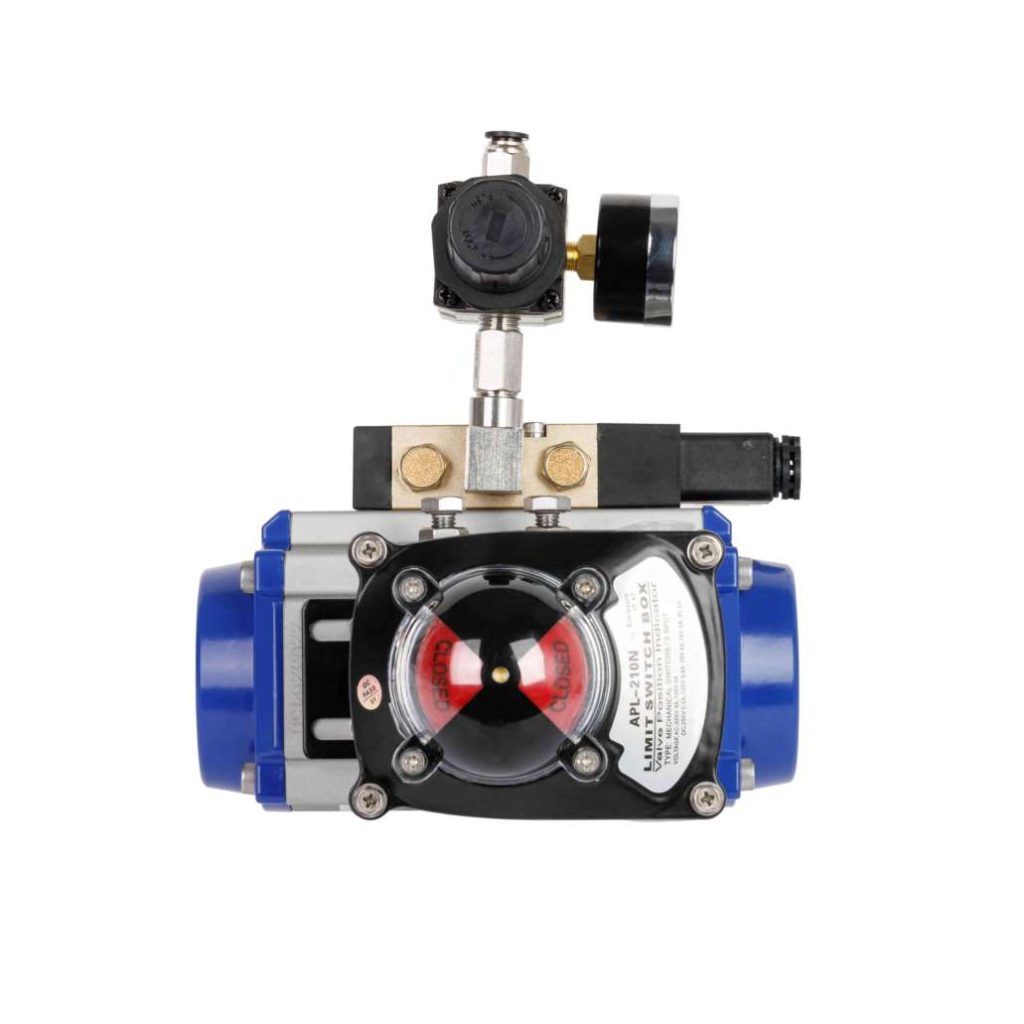
A pneumatic actuator is a device that uses compressed air to produce mechanical motion. It converts the energy of compressed air into physical movement, typically linear or rotary, to perform a wide range of tasks. Pneumatic actuators are widely used in various industries due to their simple design, reliability, and efficiency. In this article, we will explore the principles of pneumatic actuators, the different types available, and their common applications.

Principles of Pneumatic Actuators

Pneumatic actuators operate based on the principle of converting the energy stored in compressed air into mechanical motion. Compressed air, which is typically stored in tanks or provided by air compressors, is directed into a chamber within the actuator. The pressure of the air forces a diaphragm, piston, or other mechanical components to move, thereby producing linear or rotary motion. When air is supplied to one side of the actuator, the force generated moves a piston or diaphragm in one direction. A return spring or the release of air pressure on the opposite side typically brings the actuator back to its original position, completing the cycle. This motion can be used to open valves, move machinery, or control other equipment in automated systems.