In the realm of modern home comfort and energy management, thermostat temperature controllers have emerged as essential tools for maintaining optimal indoor environments. These devices have come a long way since their inception, evolving from simple manual regulators to sophisticated, automated systems that offer both convenience and energy efficiency.
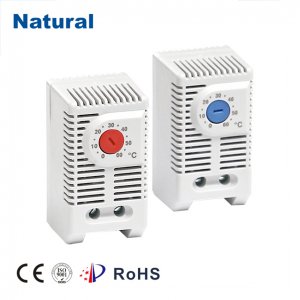
Thermostat temperature controllers play a pivotal role in ensuring that indoor spaces remain at comfortable temperatures, regardless of external weather conditions. They achieve this by monitoring the ambient temperature and adjusting heating or cooling systems accordingly. In the early days, thermostats were mechanical, requiring occupants to manually set the desired temperature. These rudimentary controllers lacked precision and were often inefficient, resulting in temperature fluctuations and unnecessary energy consumption. The advent of digital technology revolutionized thermostat temperature controllers. Programmable thermostats emerged, enabling users to set specific temperature schedules throughout the day. This innovation allowed for more precise control, optimizing energy usage by reducing heating or cooling when spaces were unoccupied or when less conditioning was required. However, these early digital thermostats still demanded user input and were limited by pre-set schedules. The true leap in thermostat technology came with the introduction of smart thermostats. These devices harness the power of the Internet of Things (IoT) to connect with other devices and adapt to users’ lifestyles. Equipped with advanced sensors, learning algorithms, and remote connectivity, smart thermostats can analyze factors beyond temperature, such as humidity, occupancy patterns, and even local weather forecasts. This data-driven approach empowers the thermostat to make real-time adjustments, ensuring optimal comfort while minimizing energy waste. One of the key features of smart thermostats is their ability to learn from user behavior. Through machine learning, these devices adapt to occupants’ routines and preferences, making automatic adjustments without requiring constant programming. For instance, if a homeowner typically lowers the temperature at night, the thermostat learns this pattern and takes over the task, reducing the need for manual intervention. This not only enhances convenience but also contributes to energy savings. Remote access is another hallmark of smart thermostats. Through dedicated mobile apps, users can control and monitor their thermostat settings from anywhere. This capability proves invaluable in scenarios such as unexpected travel or changes in routine. If a user forgets to adjust the thermostat before leaving for a vacation, they can remotely set the system to an energy-saving mode, preventing needless heating or cooling in an unoccupied home. Energy efficiency is a critical aspect of modern living, and smart thermostats excel in this arena. By leveraging real-time data and predictive algorithms, these controllers can optimize temperature settings to strike a balance between comfort and conservation. For instance, some smart thermostats can factor in the thermal characteristics of a building and its insulation quality to determine how quickly the indoor temperature changes. This level of precision prevents the system from overcompensating and consuming excess energy. In conclusion, thermostat temperature controllers have come a long way from their mechanical origins to the smart devices we have today. The evolution of these controllers showcases a transition from basic regulation to intelligent adaptation, driven by advancements in digital technology and data analysis. Smart thermostats not only provide a more comfortable living environment but also contribute significantly to energy savings and reduced environmental impact. As technology continues to advance, we can expect further innovations that enhance the efficiency and convenience of thermostat temperature controllers, making them an integral part of sustainable and comfortable living.