In the era of electrification and advanced automation, the High Current Power Relay has become one of the most essential components in power control and energy management systems. This device, often overlooked compared to more complex semiconductors, serves as a critical bridge between low-power control circuits and high-power electrical loads. Its ability to safely and efficiently manage large currents makes it indispensable in industries ranging from automotive engineering to renewable energy systems.
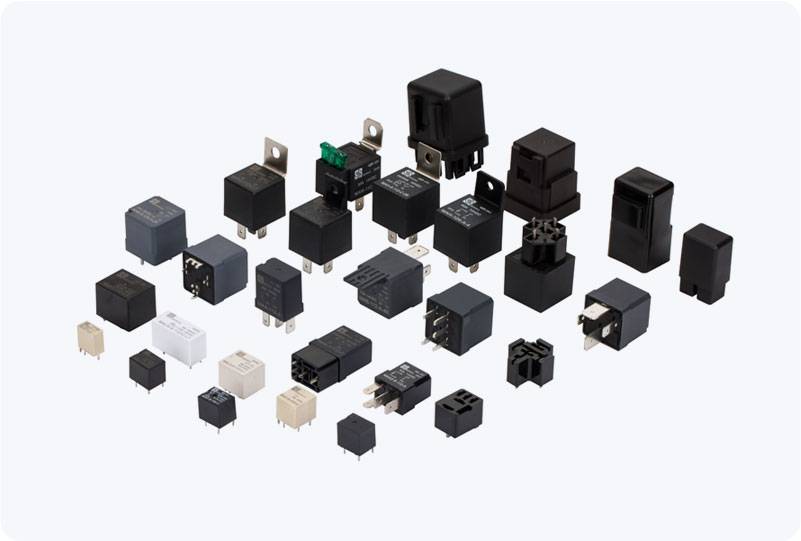
A High Current Power Relay is fundamentally an electromagnetic switch designed to control circuits carrying high levels of current—typically from tens to hundreds of amperes. While the basic working principle is similar to that of a standard relay, the high current version is engineered to handle significantly greater electrical stress. It consists of a coil, movable armature, and heavy-duty contacts designed to resist arcing and heat buildup. When an electrical signal energizes the coil, it generates a magnetic field that pulls the armature, closing or opening the contacts to control the circuit.