In the realm of electrical engineering and automation, the Power Relay stands out as a critical component for managing and controlling high-power circuits. This electromechanical device acts as a switch that can be operated by a low-power signal, allowing for the safe and reliable control of larger electrical loads. Power Relays have extensive applications in a variety of fields, from industrial automation to everyday household appliances, making them indispensable in modern technology.
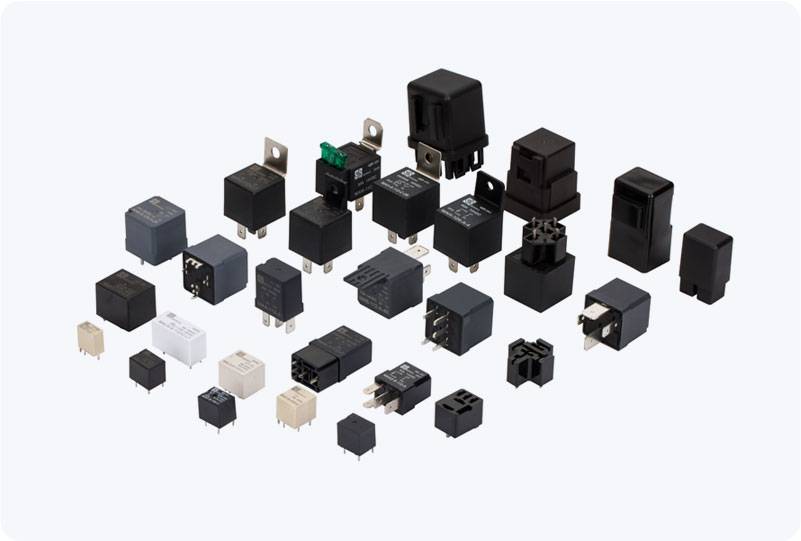
Understanding the Power Relay At its core, a Power Relay consists of several key components: a coil, contacts, an armature, and a spring mechanism. The coil, when energized with an electrical current, produces a magnetic field that attracts the armature, closing the contact points and completing the circuit. This operation allows a low voltage control signal to manage high voltage devices safely. Power Relays can be classified into different types based on various factors, including the number of contact points and the type of electromagnetic operation. The most common type, the electromechanical relay, uses the principle of electromagnetism to function. However, solid-state relays (SSR) are also gaining popularity due to their lack of mechanical parts, resulting in faster switching times, higher durability, and reduced electromagnetic interference.