Car relays are an integral part of automotive electrical systems. They act as switches that control high-current circuits with low-power electrical signals. By using a relay, you can protect sensitive components and manage multiple electrical functions in your vehicle with ease. In this article, we’ll explore the different types of car relays, their functions, and where they are typically used in vehicles.
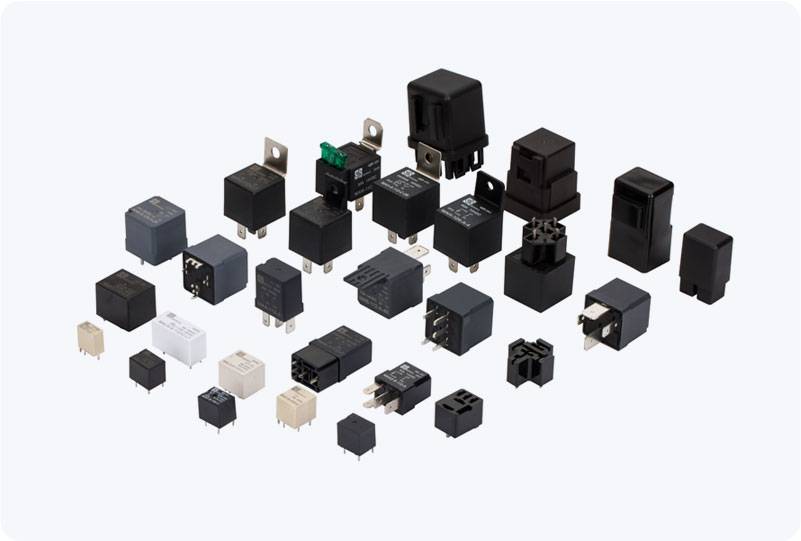
What is a Car Relay? A car relay is an electrically operated switch that allows a small electrical signal to control a much larger current. When you press a button to turn on your headlights, for example, a relay might be responsible for turning on the high-current circuit that powers the headlights. The use of relays in cars ensures that high-power components can be controlled with low-power signals, making the system both efficient and safe. Common Car Relay Types 1. SPST (Single Pole Single Throw) Relay The SPST relay is the most basic type of relay, often used for simple on/off applications. It has a single input and a single output, and it either allows or interrupts the flow of electrical current. This type of relay is commonly used for low-power devices like controlling horns or basic lighting systems. The simplicity of the SPST relay makes it a favorite for straightforward electrical switching tasks.