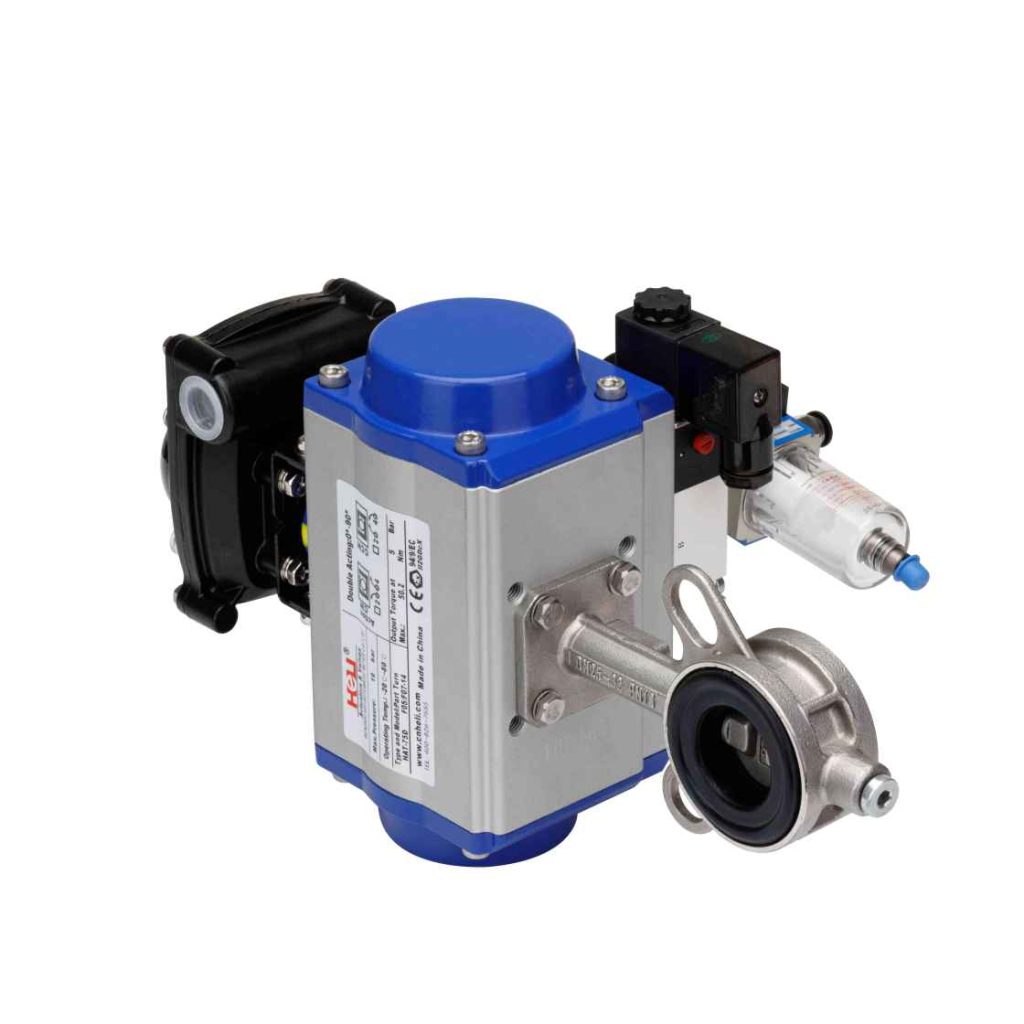
The WCB Pneumatic Butterfly Valve is a versatile and efficient valve type used in a variety of industrial applications. This valve is essential in controlling fluid flow, offering precise regulation of liquids, gases, and steam within pipelines. The acronym “WCB” refers to the valve body material, which is typically made from carbon steel (WCB), known for its mechanical strength and durability. In this article, we will explore the features, working principle, applications, and advantages of the WCB Pneumatic Butterfly Valve.
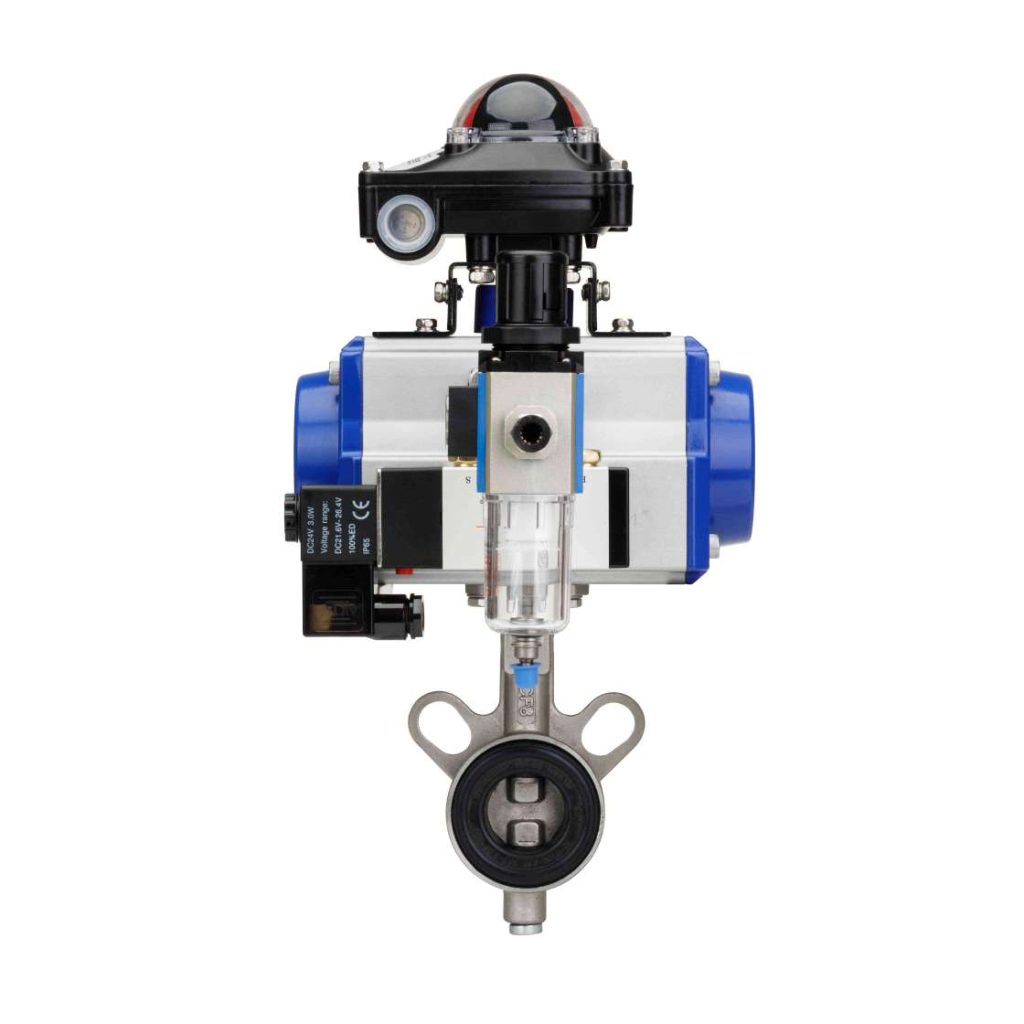
Features of the WCB Pneumatic Butterfly Valve
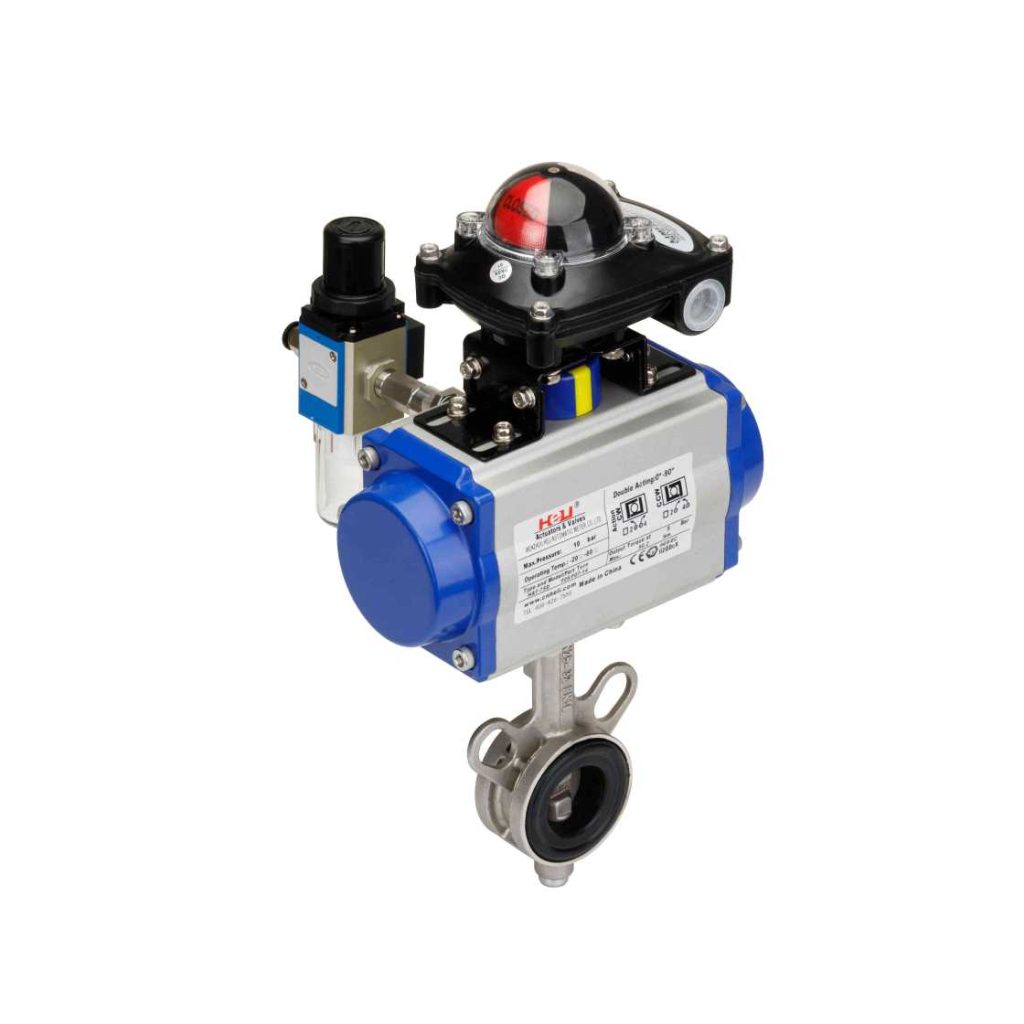
Pneumatic Actuation: The primary feature of the WCB Pneumatic Butterfly Valve is its pneumatic actuator. The actuator uses compressed air to open or close the valve, making it ideal for automated processes where remote control or rapid actuation is required. Pneumatic butterfly valves are often chosen for their quick response times and ease of integration into automated systems. Compact Design: Compared to other types of valves, the WCB pneumatic butterfly valve has a compact design, which makes it a space-saving solution in confined areas. The valve body is lightweight, and its simple construction enables easy installation and maintenance, lowering operational costs.