Relays are essential components in the world of electrical engineering, widely used in a variety of control and automation systems. Among the many types available, the 24VDC relay is particularly common in applications where a low voltage is needed to control larger loads. Whether used in industrial automation, electrical control, or automotive systems, 24VDC relays play a critical role in managing power without the need for complex or expensive components. This article aims to explain what a 24VDC relay is, its working principle, its applications, and some key considerations when using it in circuits.
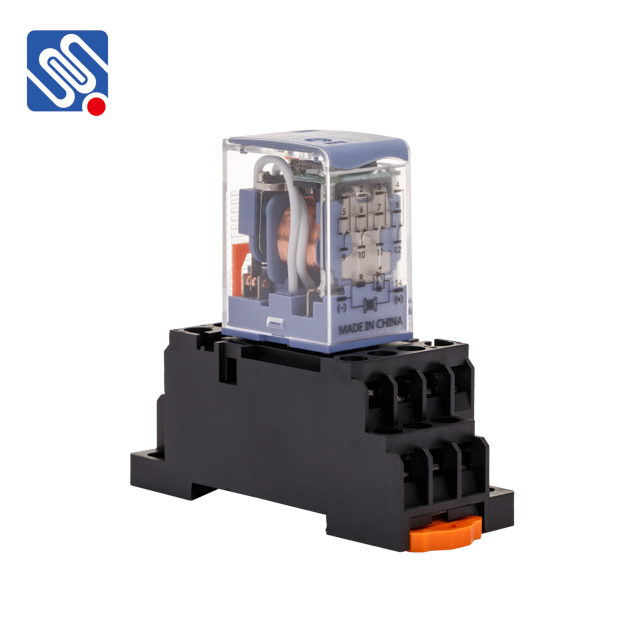
What is a 24VDC Relay? A 24VDC relay is an electromagnetic switch that operates on a 24-volt direct current (DC) power supply. The primary function of the relay is to control a separate electrical circuit by using a small control current to activate a larger current. The relay consists of a coil that, when energized by the 24VDC supply, creates a magnetic field that pulls or pushes a set of contacts to either open or close. These contacts are used to control the flow of current to an external load, such as a motor, light, or other high-power devices. How Does a 24VDC Relay Work? The operation of a 24VDC relay is quite simple. When 24VDC is applied to the coil of the relay, it generates a magnetic field that causes an internal mechanical switch to either open or close, depending on the type of relay. There are typically two types of relay contacts: Normally Open (NO) and Normally Closed (NC).