Pneumatic butterfly valves are essential components in various industries for controlling the flow of fluids in pipelines. Their efficiency, simplicity, and reliability make them a popular choice in systems requiring precision and automation. This article aims to explain the structure, working principle, advantages, and applications of pneumatic butterfly valves.
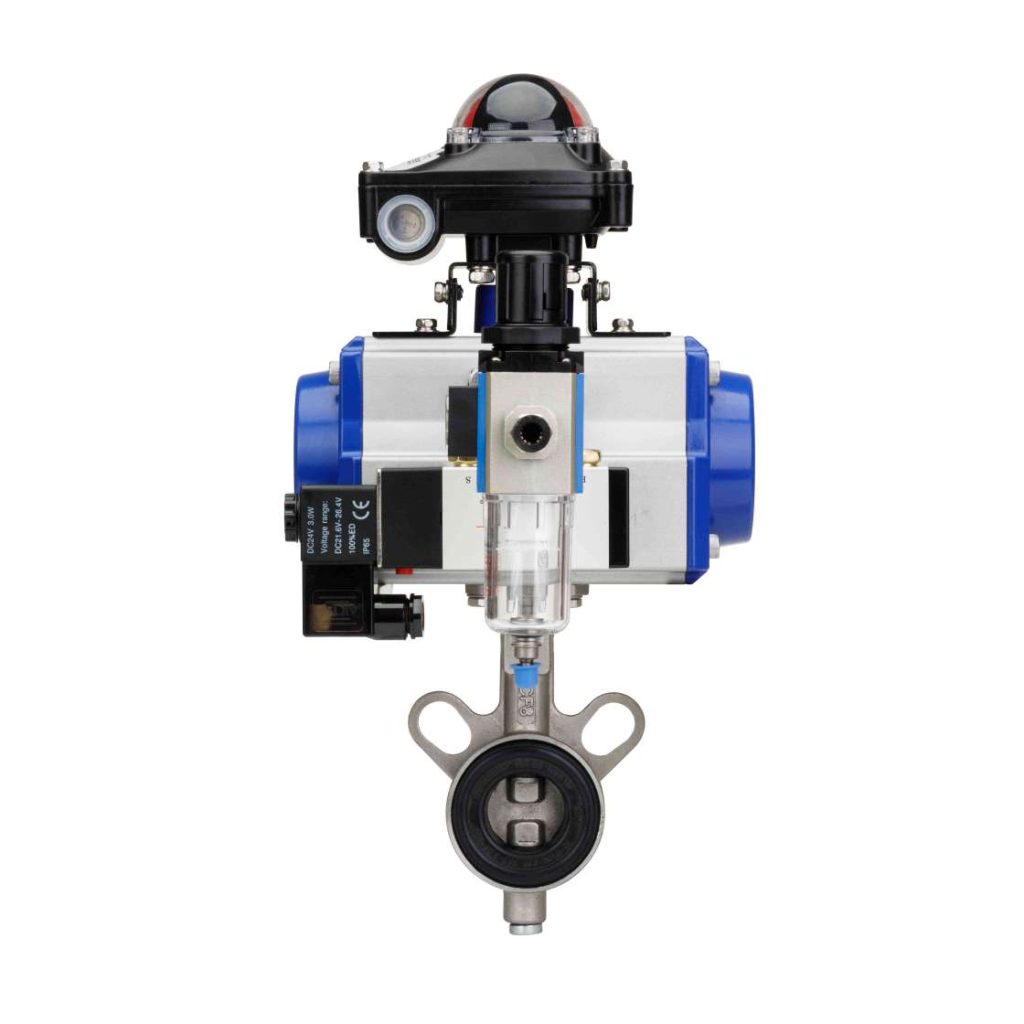
What is a Pneumatic Butterfly Valve?
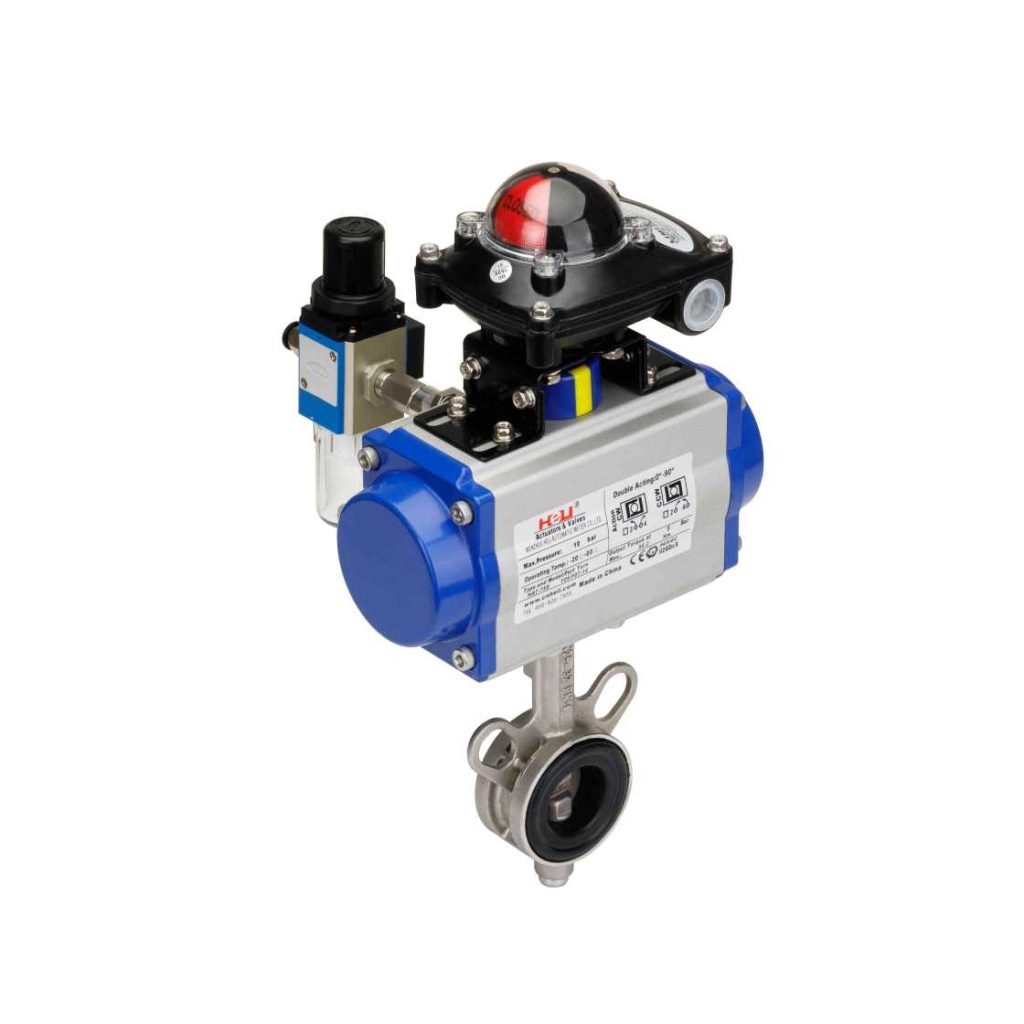
A pneumatic butterfly valve is a type of quarter-turn valve that uses compressed air to operate a disc-like valve element (the “butterfly”) inside a pipe. The valve controls the flow of liquid, gas, or slurry through the pipe by rotating the disc to either fully open or close the flow path. The term “butterfly” comes from the valve’s design, where the rotating disc resembles the wings of a butterfly when in operation. Unlike other types of valves, such as ball valves or gate valves, the butterfly valve operates with minimal movement, making it a cost-effective and efficient option for a wide range of applications.
