In today’s rapidly advancing technological world, one might assume that high-tech gadgets and smart devices dominate the realm of temperature control. However, amidst the proliferation of digital innovations, the adjustable mechanical thermostat remains a steadfast and reliable tool for maintaining comfortable indoor environments. This article delves into the functioning and benefits of the adjustable mechanical thermostat, highlighting its enduring significance in modern settings.
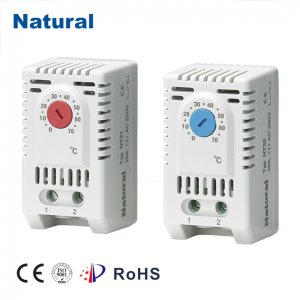
Functionality and Operation The adjustable mechanical thermostat is a classic example of simplicity meeting practicality. Operating on the principle of a bimetallic strip, this device consists of two metal strips with different rates of expansion bonded together. As the temperature changes, these strips expand or contract at varying rates, causing the strip to bend. This bending action is then translated into mechanical motion that either opens or closes a circuit. When the circuit is closed, heating or cooling systems are activated to bring the room temperature back to the desired level. Advantages Reliability:One of the primary advantages of adjustable mechanical thermostats is their reliability. Unlike their digital counterparts, which may be susceptible to software glitches or connectivity issues, mechanical thermostats are immune to such technological hiccups. They function solely based on the physical properties of the bimetallic strip, ensuring consistent performance over time. Simplicity:Simplicity often breeds durability, and this holds true for mechanical thermostats. Their straightforward design makes them easy to install and operate, reducing the need for extensive user manuals or technical expertise. Homeowners can quickly grasp their operation without the complexities of digital interfaces. Energy Efficiency:In an era when energy conservation is paramount, mechanical thermostats offer an energy-efficient solution. Once set to the desired temperature, they do not consume additional power to maintain the selected climate. This stands in contrast to digital models that may continually draw power for displays or connectivity features. Cost-Effectiveness:Mechanical thermostats are notably more affordable than their digital counterparts. This cost-effectiveness extends beyond the initial purchase, as their durable construction reduces the need for frequent replacements or repairs. Compatibility:Mechanical thermostats are often compatible with a wide range of heating and cooling systems. This universality makes them suitable for various residential and commercial applications, regardless of the specific HVAC setup. No Learning Curve:While digital thermostats may require users to navigate through menus and settings, mechanical thermostats are user-friendly with no learning curve. Simply set the desired temperature by turning a dial, and the thermostat takes care of the rest. Longevity:Thanks to their sturdy construction and lack of electronic components, mechanical thermostats have a reputation for longevity. They can withstand wear and tear, making them a sound investment over the years. Conclusion In a world captivated by digital innovation, the adjustable mechanical thermostat remains a reliable, cost-effective, and energy-efficient solution for temperature control. Its straightforward operation, compatibility with a variety of systems, and long-lasting durability make it a favored choice for many homeowners and businesses. As technology continues to evolve, it’s important to remember that sometimes the simplest solutions are the most enduring.